Modern homes are all the rage in real estate. I don’t know about you, but I’m seeing them pop up not only in Sacramento, but in many markets throughout the United States. So today I wanted to interview Ted DeFazio, a local real estate agent who specializes in these types of homes. I hope this will be valuable and interesting. Any thoughts?

Ryan: What is a modern home? And what is NOT a modern home?
Ted: The way I describe a modern style home would be the use of clean lines, lack of ornate detailing, open feel, in many cases vaulted ceilings, merging of indoor and outdoor spaces with a combination of large windows and doors and usually has a post and beam angled, commercial style flat or simple gable roof lines. Some homes will have a combination of all three. Carports and clerestory windows (starting beyond the header and into the roof line) are often a trademark of the modern style as well.

Ryan: So how do you describe that home with a few modern upgrades?
Ted: There are a lot of homes that would be considered contemporary and not full on modern. But I think this is all very subjective and up to interpretation. For instance, a ranch home that has had a modern style kitchen remodel with flat front cabinetry and minimalistic touches might feel modern but is it a modern home? I think the architecture from the front elevation and finishes through to the back yard would have to reflect that same style in order to be considered a true modern home. I remember a home in Granite Bay that was a mix of styles with some very modern and some very traditional details. Did it work? Sure. Was it a little confused? Yes.
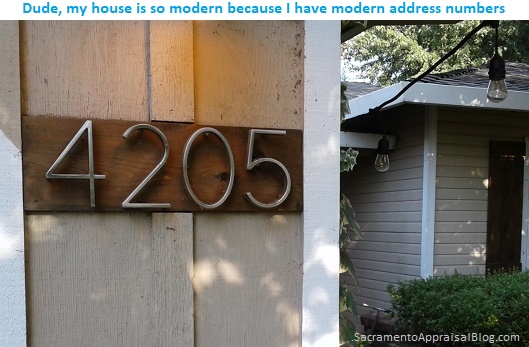
Ryan: What is the difference between modern and mid-century modern?
Ted: Mid century modern would be homes built in the 1950-1970s era. Eichler style and many Carter Sparks designed (built by Streng Bros) homes fit this style to a T. They are mostly post and beam architecture and have that unique, classic style. Dramatic entry ways and striking front elevations sometimes devoid of regular height windows, carports instead of conventional garages, exposed concrete hallways, flat front cabinetry, skylights, atriums, courtyards, aluminum windows and large sliding glass doors and clerestory windows are all signatures of this style.


Ryan: Do modern homes have to be newer in age?
Ted: Modern style homes are not exclusive to a decade. There are new homes being built in a modern style today. There are some great examples in the Sierra Oaks, Wilhaggin and Downtown Sacramento neighborhoods. Some homes combine styles like say a modern craftsman or modern prairie style.
Ryan: Why do you think modern homes are showing up more and more in Sacramento and beyond?
Ted: The average buyer in Sacramento is getting more sophisticated and open to different styles of architecture. We are slowly shedding the “country bumpkin” label as a city. I think the influx of Bay Area buyers is also pushing the design landscape into a more modern feel. Is it a trend? Probably. But the farther we get away from faking Tuscan style, the better. Some people want to be different and living in modern architecture definitely makes a statement. Some buyers might have grown up in a Streng or Eichler style and want to get back to the feeling of living in one again.
There was a time when modern Streng Bros homes were difficult to sell and earned such descriptions as 70’s architecture or flat-tops. I created SacModern.com to help highlight the many modern and contemporary homes on the market. Give them a stage, in a way. And try to describe them using terms true to their respective styles. I have sold homes to many out of towners through the state who find that Sacramento as a region has a lot of cool architecture. Not only is there a great selection of modern properties but they are cheap compared to the larger metro areas the buyers are coming from.
Ryan: What do buyers of modern homes tend to look for?
Ted: Open concept living, striking architecture, outdoor privacy, creative inspiring spaces and a place to show off their vintage furniture collection. Your home can be seen as an extension of your personality. Someone that is more reserved might want a more buttoned down traditional home whereas a flamboyant or eccentric type might seek something radical or different than the norm as far as design goes.

Ryan: Any tips for valuing modern properties?
Ted: Typically, a modern home will sell for more than the traditional style home down the street with the same square footage. Maybe it’s a premium for the architecture, the special finishes or the time that went into designing the home. I usually ask the appraiser if they are familiar with the style before they meet me at the property just to make sure they understand the unique qualities. In the Bay Area, the modern neighborhoods are becoming historical areas, protected from demolition or odd style-killing remodels. Because the Bay Area usually has a ripple effect in Sacramento, this might be coming down the pipe for our area.

Ryan: Anything else you want to add?
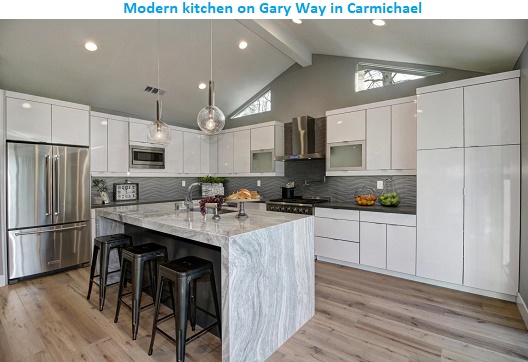
Ted: Some of these styles do better in different areas. In El Dorado Hills for instance, modern is a tougher sell than in a more city-centric area. I find that the farther away from Downtown Sacramento you are, the harder it will be to sell modern style architecture. My Gary Way listing in Carmichael would’ve been sold a lot faster if it was closer to downtown. Is this due to the demographics that typically buy these homes? Not sure. But I have seen it quite often. Professionals and creatives alike are drawn to the modern style. These types tend to work in and around the core and see a suburban commute as a huge negative.
Ryan: Thanks so much for doing the interview. You killed it. Everyone, you can check out Ted’s website here.
Closing appraisal thoughts: My observation is many modern and mid-century modern homes carry a wider appeal, so it’s important to not just choose three ranch homes in the neighborhood for comparison. This means in many cases we might have to go out a little further and find something that is architecturally similar (and in a competitive area hopefully too). For instance, I appraised a Mid-Century Modern home in Fair Oaks recently and I pulled comps from various portions of Fair Oaks and Carmichael because of the custom nature of the property. I couldn’t just keep it nice and tight in the immediate area because the market area was simply wider for these types of properties.
Questions: What do you think of modern homes? Where are you seeing modern homes pop up? Do you think they sell for more than traditional ranch homes? I’d love to hear your take.
If you liked this post, subscribe by email (or RSS). Thanks for being here.

 When hunting for and evaluating homes for my flipper clients, garage conversions have a negative impact. In plain English, I calculate the cost to remove the conversion and restore the garage to original usage in 100% of cases. Why? Most conversions are unpermitted and ultimately that would have to be resolved. Most conversions are poorly executed, have issues with HVAC and access to bathrooms. Buyers want garages for vehicles and storage. While the conversion may have added temporary value for the seller, paraphrasing some of my favorite rock and roll: “you’re fooling yourself if you believe” it adds value for a buyer.
 I believe that if done well, they are a wash. They add some value by increasing the size of the home, but at the same time detract value by removing the garage. If done poorly, they can absolutely remove value. This includes if they are done with shoddy workmanship, but also if they are done when there is a lack of other parking or storage space. I have seen numerous examples of homes with converted garages that have little on street or driveway parking and/or have nowhere to store the junk that would normally go in a garage. If someone were to want to do a conversion, they should have ample additional parking and a shed or some other type of storage space for typically garage stuff. I also think that when people do a permanent conversion that removes the garage door and replaces it with an exterior wall, it definitely detracts from the curb appeal and lowers value.
 There are several factors that I take in to consideration when trying to determine what adds or subtracts value — OR — adds or subtracts to the desirability of a home in general. Best case scenario with a garage conversion that will add value = good workmanship, done with permits, and the presence of available garage parking that is consistent with the surrounding neighborhood. Worst case scenario with a garage conversion that will subtract value = poor workmanship, done without permits, and no available garage parking that is consistent with the surrounding neighborhood (See more of Erin’s thoughts on conversions
  I can definitely shed some light on how they could possibly add value, for the right buyer. I find that the older, tiny detached garages like ones found in East Sac or Land Park barely fit a car in them as is. When converted to a game room, man cave, or office, it creates a completely private place to escape to. The best example I can think of was an episode of Interior Therapy by Jeff Lewis. In the episode, Jeff converted a backyard garage into a home office and lounge type area. This garage was previously used as junk storage and by the end of the conversion you could see how much it brought to the property.
 In my experience, garage conversions typically do not add value to a home. Right off the bat, a large handful of buyers will not even be interested in the property if it does not have a garage. Therefore, the seller is missing out on about 60% of the potential buyers. So now your competition/interest in the home has already dropped. Next, the question screams: “Was it done with a permit?” Most of the time, garage conversions were not done with permits. This causes red flags for buyers and also eliminates more buyers who are using financing that will not allow non-permitted garage conversion purchases. Additionally, most garage conversions have a step down into the room and it typically does not “feel” like the rest of the house. Due to this, it does not add value for the extra square footage. You lose a garage and in place have not as good quality extra square footage. This leads to using the original square footage when trying to value the home with recent sales. With all of this factored in: In most cases garage conversions decrease the value of a home. At best, the conversion equally cancels out the loss of the garage. The only time it would add value is if you are adding a bedroom and/or bathroom that was done with permits, does not have a step down, the central heat/air is tied into the space and gives the same “feel” as the rest of the home.
 All I’d really say on the subject of whether garage conversions add value is: It depends. Are they common to the neighborhood? Some older neighborhoods of mostly two-bedroom homes have seen a large number of garages converted to additional living or bedroom space, and in neighborhoods like this it makes sense. Generally speaking, though, I think most people want a garage and are willing to double an office as a guest bedroom instead of looking for two rooms. More often than not when I take clients through homes with garage conversions I get comments like “this is kind of funky” and we have the discussion about how difficult it would be to convert it back to a garage.
 Buyers want bedrooms, bathrooms, nice living spaces and in most cases, a garage. In the past 12 years I’ve sold 3 homes with converted garages. These are their stories: 1) A single mother; 2) An investor looking for his next rental, and he liked the converted garage so he could charge more for rent (since it was called a “bedroom” – never mind that the driveway drainage was poor and it slanted down into the garage); 3) An elderly librarian who was also a first time home buyer, who had 12 cats. Yes, the converted garage was for the cats. So for those potential buyers, go ahead and convert those garages! Otherwise, please leave a garage as a garage. I haven’t even gotten into the hassle on the lending side if this conversion was done without permits. If you want to make your home appeal to the most buyers, and sell for more money, leave the garage intact.
 I think conversions would really be on a case by case basis… and mostly dependent on the needs of the buyer. I am a strong believer that each sale is unique, and if you are in the right place at the right time, you could sell a property for significantly more than you would at a different time. This definitely includes conversions, as some people try to maximize on their living area. Not having a garage though will definitely have a negative impact on the value. Another big factor would be the neighborhood. Many of the lower priced neighborhoods may even benefit from having a conversion (kind of like diluted price per square foot), so it may have a positive impact on the overall price. Higher end neighborhoods, however, don’t necessarily look at the total square footage to determine the price but more on the outlay, condition, and lot. It would also have a much larger negative impact in a higher end neighborhood as it’s not necessarily seen as “desirable” to live in a conversion. Maybe a cheaper alternative to an in-law quarter. 🙂
 As far as conversions, we usually convert them back. We’ve found that most people value a garage more than an additional bedroom. The need for extra storage space along with the reality that most conversions aren’t done very well leaves us converting about 90% back to garages.